It was around 2019 that I encountered Gary Kent’s long unavailable feature, The Pyramid (1976). I already knew Gary Kent as a legendary stuntman, who’d worked regularly with directors like Richard Rush, Al Adamson and Ray Dennis Steckler — and he had deep ties to the Alamo Drafthouse in Austin where I was once a film programmer — but I’d never come across his few films as a director (also including Secret Places, Secret Things (1971) and Rainy Day Friends (1986)). Aside from being a fascinating piece of its time, The Pyramid intersected with many of my then-current research areas, namely the 1970s fads of Kirlian photography and parapsychological experiments with plants, as well as developments in television news as third-party consultants pushed the concept of competitive ratings, leading to increased sensationalism in news content. Released the same year as the much higher-profile studio film Network, Kent’s film is centered on a news correspondent (Michael Ashe) who is traumatized by the the on-air suicide of a colleague. He leans into the flourishing new age movement, through which he seeks to counteract the negativity of his profession.
Shortly after seeing The Pyramid, I met up with Gary Kent at Austin pancake restaurant Kerbey Lane (his request!) to ask about its production, his intent in making it, as well as touching on some of his now-classic anecdotes (Read: Charles Manson).
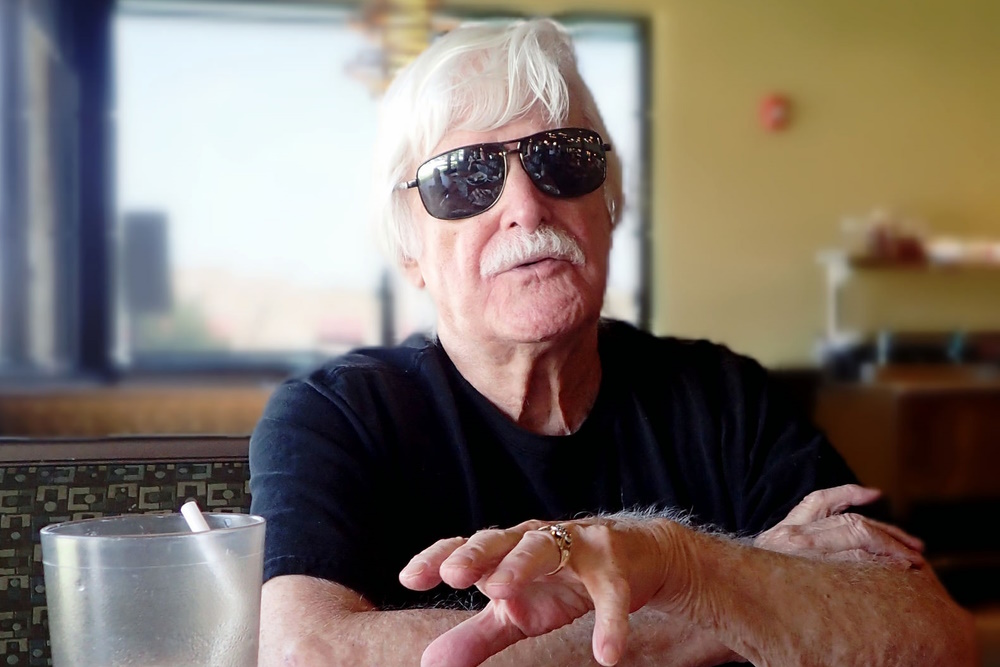 Gary Kent, Photo by Joe O'Connell
Kier-La Janisse: So how did The Pyramid come about?
Gary Kent: I co-directed a film, an exploitation film [Secret Places, Secret Things, 1971] right before I did Pyramid. I wanted to direct very badly. And this producer from LA called me from Texas – I knew him in LA as a medic on the set. All of a sudden he calls, says ‘I’m producing a film in Dallas, I want you to direct, it’ll be your chance to direct.’ And I said, ‘oh, great.’ Down to Dallas I went, he didn’t have his money. It fell through there. I was in Dallas, but nothing going on. Oh God. And then a friend of mine said, ‘well, they weren’t ready, but you are.’ And I said, ‘okay, you’re right. I’ll just do my own film.’ So I thought, what, what can I do a film about? And I’d been a news reporter.
KJ: Oh, you had been? I didn’t know that.
GK: In Corpus Christi, in Houston, Texas. Right after I got out of the service. So long story short, there I was in Dallas and I thought, I’ll write a story. One of the things was the fact that there was no good news all the time. It was the bad news. And we were encouraged to do it, get the body count, get the blood, get the gore on the news. And I thought, how about a news reporter that grows tired of bad news and wants to do good news and he gets fired because of it? And I had met a bunch of New Age people in Dallas. They were just incredible. Actually, what happened was, uh, I thought, how am I gonna make a living while I’m writing this single one? And Phantom of the Paradise came to town, are you familiar with that movie?
[I show him the Phantom of the Paradise ring that I’m wearing]
GK: <laugh>. Do you believe that? <laugh> Wow. Oh, I’ll be darned. They came to Dallas, A friend of mine, Paul Lewis was production manager and he said, would you like to work for us in Dallas on this? And I said, sure. And long story short, there was a crew from New York and a crew from LA – they didn’t get along at all. And it was over Christmas, everybody wanted to be home. And they were stuck in Dallas. They were PO’d But I had met these, for some reason, all these new age-y people in Dallas. And they just came to my rescue and helped me. The guy that hired me got fired and he went back to LA and I inherited this movie company in Dallas over the holidays. So the Dallas people came together and really helped me get that movie made. And I made enough money to stay and write my script. So I thought instead of doing just a normal film, I’ll do one about positive things going on, and I’ll have a news reporter go interview real people that are really involved. Like Edgar Mitchell, the astronaut, Thelma Moss, who was head of Neuropsychiatry [at UCLA]. Well, you saw the film.
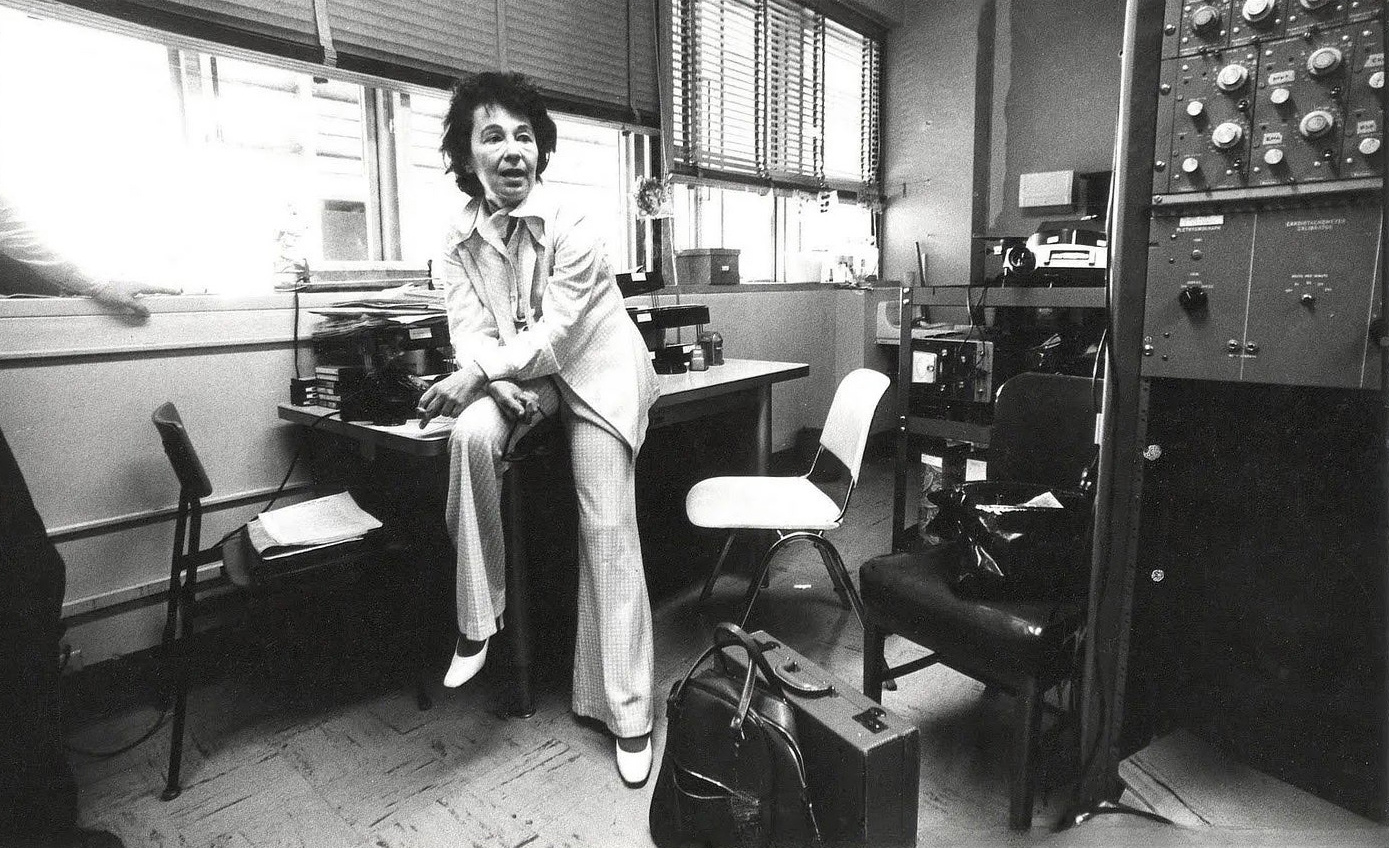
Thelma Moss, photo by Heather Harris
Thelma Moss was a former actress-turned-psychologist who was head of UCLA’s parapsychology lab, a collection of adventurous researchers based in the university’s Neuropsychiatric Institute that had been founded in 1967. Moss visited the USSR in the 1970s to investigate Kirlian photography, which became an increasing obsession and a focal point of her research at the lab, much to the chagrin of Moss’ colleague Barry Taff – later to gain fame as one of the parapsychologists working on “The Entity” case. It eventually cost Moss her job; she was dismissed from the NPI in 1978. But before Moss left her post, she gave a Kirlian device to David Bowie, who famously used it to document his ‘aura’ before and after using cocaine, using some of the resultant images in the printed programme that accompanied his 1976 Station to Station tour.
—From my 2019 article “Murder Season: The Strange World of Vegetal Detecting” on ByNWR.comKJ: Yeah. I mean I noticed at some point, ’cause there was so, so all those, that interview footage where he’s going around filming people like Thelma Moss, was that stuff shot back in LA or was she in, where was, where was that stuff shot?
GK: LA.
KJ: OK. So at some point you went to LA to shoot some of those things.
GK: Exactly. I met this magic little guy named Kim Russell who said, I’m a pyramidologist. I don’t even know what that is, but my movie wasn’t really about pyramids, as you know, it was about “the fire.” But he knew everybody, As a kid, he was like 19, He knew Edgar Mitchell, he knew Thelma Moss. They all loved him and revered him. So he took off in his little Honda with me and we went to California and we just drove up and down the state interviewing people for the movie. Yeah. So, and then, uh, after I started shooting, I shot it partially in Dallas, a lot of it in Dallas actually. Then I brought the company to LA and it’s funny because all the people from Dallas, when they heard we were going to LA they all got roadmaps how they could get out of LA real quickly in case of an earthquake <laugh>. Uh, but it turned out to be a, a good deal because we shot in LA then, then we got cooperation from everybody.
KJ: So like the movie theater that he goes in when he is first trying to show his film to somebody and they’re like, ‘what is this?’ You know, where’s that theater?
GK: LA. And I forget the name of the theater. I think it may have been a porno house or something. I just got it for the day.
KJ: So what was your familiarity with people like Thelma Moss and stuff before making the film? Was that just people you found while you were making the film?
GK: I had read her book In The Eye of the Needle about LSD, which kind of interested me. And I had taken a couple of acid trips by then, so I had read her book. And Edgar Mitchell I just revered because I revered all the astronauts. I thought, wow, if I can get in touch with Edgar Mitchell. And then this little fellow I mentioned, Kim Russell, knew Edgar Mitchell and he said, we’ll just drive up to Edgar’s house. I went, yeah, really ??<laugh>. So we went and there I was sitting with him, I couldn’t believe it. One of my heroes! And so I just put him in the movie and he turned out to be a really staunch defender of what we were writing about.
KJ: There was somebody that I noticed in your film where it was like, during those interview scenes and it’s kind of, the camera just flashes by him for a second. And I was like, that guy looked like Cleve Baxter. And it was!
GK: It was Cleve, yeah.
The most noted (and quoted) of experimenters in plant communication was Cleve Backster (1924-2013), an interrogation specialist with the CIA and considered their foremost polygraph expert, who had a vegetal epiphany on February 2, 1966 when he attached his polygraph to a plant on a lark. He wanted to see how long it took water to get from the pot to the uppermost leaf, and knew that he could measure this by using the galvanic skin response section of a polygraph, in which two electrodes are attached to either sides of a subject’s finger (or in this case, its leaf). A small electrical current flows from one electrode to the other, while a needle-like pen passes over a continuous graph, recording the body’s resistance to the current. And as we’ve seen in a million movies, when the subject has an emotional reaction, the needle jumps on the graph, creating a pronounced zig-zag. When Backster monitored the plant’s resistance to the electrical current, he determined that what he was witnessing was what he had come to recognize – through nearly two decades of expertise – as an emotional response.
Backster’s life would never be the same. From there he conducted a series of experiments, largely focused on measuring how plants respond to trauma. He conducted tests where he attached the polygraph to houseplants that were in a room where a body was found. And then paraded through suspects to see if the plant would identify the killer. Backster proposed that there is some kind of cellular consciousness, that plants can detect changes or harm to actual individual cells of living tissue in their proximity. As such, he argued that plant sentience goes right down to the molecular level. Further, in experiments where he burned or maimed plants, he noticed that they responded more strongly to his thoughts of harming them than they did to the harm itself, which he saw as proof of extrasensory perception in plants. Backster published his first paper on the topic, “Evidence of Primary Perception in Plant Life,” in The Journal of Parapsychology in 1968. Backster’s experiments became a focal point of both science and occult magazines for the next decade.
—from my 2019 article “Murder Season: The Strange World of Vegetal Detecting” on ByNWR.comKJ: But he didn’t have like a speaking role or anything. It was just like, he was sort of one of the many people that were sort of just showing the varieties of things going on at that time.
GK: We had a great interview with him, but in the interest of time, I had to cut stuff out. So I cut out Cleve’s. How do you know Cleve?
KJ: Well, that was one of the weird things too. Is that about a year before I watched your movie, I had a conversation with someone about film programming and programmers, unearthing all these weird things. And he was saying like, oh yeah, I have a friend who found some film about plants solving crimes. And I was like, plants solving crimes, is that a thing? And so I googled it, you know, “plants solving crimes.” And then this guy, Cleve Baxter came up because he had done all these polygraph experiments with plants at that time and had been actually trying to prove that a plant would be able to identify a murderer and stuff.
GK: Yeah, yeah.
KJ: And that a plant would have an emotional response to like the murderer coming in the room again if the plant had been in the room where the person got killed. And so I became obsessed with this stuff for like a year and I wrote like an article about it and everything.
GK: Really? Wow.
KJ: And then I was preparing to teach a class about it for this school [The Miskatonic Institute of Horror Studies] out in LA and, and then just by a total fluke, every Wednesday night I have all women come over to my house and we watch old exploitation films. And so one week we just watched The Pyramid.
GK: <laugh>. Ah, wow!
KJ: I was just like, I don’t know what this is. I said, it’s Gary Kent, you know, the stuntman – it’s his movie. And they were like, yeah, let’s watch that. So then we watched that and I saw Cleve Baxter and Thelma Moss and everything. And I was like, oh, that’s crazy. It ties into all this stuff I’ve been researching.
GK: So you knew who Thelma Moss was too.
KJ: Yeah ’cause she did all the Kirlian photography and stuff.
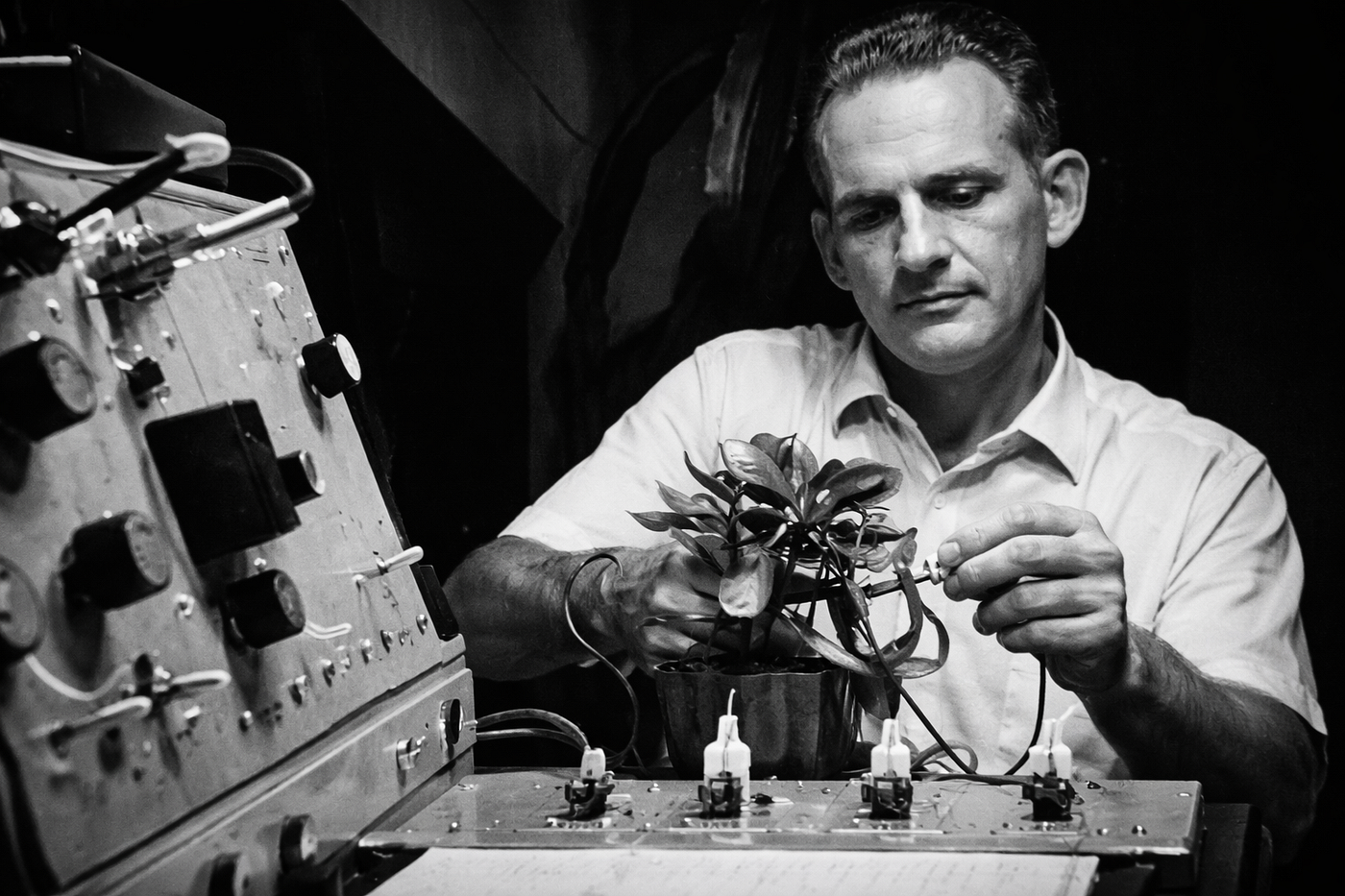
Cleve Backster, Photo by Henry Groskinsky
GK: Yeah. When we went to, uh, interview her, we all did the Kirlian pictures of the auras. So that was very interesting. ’cause it was real. And Cleve Baxter was real, what he was doing. We went to Hollywood High and in one of their sociology classes we put up a bunch of plants. Half of them were loved and nurtured and talked to, and the other half were just fed and ignored. The ones that were nurtured and talked to just grew like this [stretches hands high]. The other ones were just coming along, so we knew there was some effect. Someone said, well, it’s because when they’re talked to, they get oxygen, more oxygen than the other one. I said no, It’s more than that. Know what I mean? But we had a spoon bender, a guy that could bend spoons and we had cameras set up that he didn’t know about, and we saw him cheating all the time. So we thought, so much for the spoon benders.
KJ: So how did you end up deciding to call it The Pyramid? Out of all of these things that were happening? Why was The Pyramid the sort of thing that you focused on?
GK: Because of the word itself, pyra – mid: “the fire in the middle”. And so this was about a fire being opened up in the heart of our reporter. So I just decided, I didn’t know if Pyramid Power was in, and I could have cared less, at the time. But I just liked the word and I’d always been fascinated by The Pyramid. And Kim Russell, this little guy I told you about in Dallas, had been to Egypt and had been to the Pyramids and he was telling me about them. That you could take a cigarette paper and you could not fit it between the stones. They were that closely honed. Uh, and I thought, well that’s really interesting. How did they do that way back then? That accurately? So I just kind of liked the word and the whole mystique of what’s going on. I thought, well, that kind of fits.
KJ: But then you had the pyramid over the bed. So that is kind of related to Pyramid Power, I guess.
GK: Right, right, right.
KJ: Yeah. It just seemed like a really personal film. Like, it seemed like it was coming at a time where… it was like a film of somebody trying to recover from cultural trauma, you know?
GK: Right, right. Exactly. Which was me. I was trying.
KJ: Yeah, that’s what I was wondering, like what kind of things had happened in society and everything at that time that were contributing to your story?
GK: I, myself, was going through a lot of cultural changes at the time, experiencing, you know, the whole sixties thing going on. So I just sort of threw it all together in the pot and then decided again, I wanted to meet Edgar Mitchell. I wanted to meet Thelma Moss, and I thought a great way to do it is on a film. I’ll go in with my crew. And it worked.
KJ: Because I mean, obviously I’ve heard the Manson story of you being out there [at Spahn Ranch] and then finding out later that that’s the person you had interacted with.
GK: Yeah. So I’ve probably told this a hundred times, but we used to shoot out there all the time on the Spahn Ranch. And so I had lunch with Quentin here in Austin. He was doing a film. And uh, he impressed me because we were talking about two Jack Nicholson films that I did up in Utah years ago. My first really good stunt gigs. And he knew every line of every character in both films.
KJ: Which westerns were those?
GK: Ride in the Whirlwind…
KJ: Ah, and The Shooting. Yeah. Okay. Well, I’m actually writing a book about Cockfighter.
GK: Oh, really? On Monte? I’ll be darned. On the two westerns we did up in Utah, Monte and Jack were co-producers. The crew was notoriously underpaid and overworked. Monte hardly ever communicated with you, he communicated with the cameraman. So what’s the next setup? Usually, like Richard Rush, my favorite director, will communicate with the crew. Monte didn’t communicate with the crew at all. He didn’t have an AD so he would communicate with the cameraman and then the cameraman would tell us where we’re going next and what we’re gonna do. If you asked Monte, he was liable to just turn around and walk away. He was just so into his head. But what I started to say was that the crew went on strike because we just weren’t getting enough money. And we wanted to meet with the producers. Monte wouldn’t meet with us, but Jack did. Everybody liked Jack because he was friendly. He would stick up for the crew. He was always telling me, “Kent, you’re the best man I’ve got on the shoot. ‘Cause I was doing everything. I doubled Jack four or five times. I love Jack Nicholson. I’m sorry, I do. I know a lot of people say he’s an asshole, but he’s not. He’s really a great guy. And, anyway, I forgot where I was going. Oh, Jack would meet with everybody and give us raises or whatever our complaints were. Monte never showed up.
KJ: Do you remember working with Warren Oates on The Shooting?
GK: Yeah.
KJ: What do you remember about him?
GK: I know he was pretty much into guns, into gun culture. And Jack was just the other way around. So whenever Monte wasn’t filming, if he was setting up a shot, Jack and Warren would get in these big arguments. One, a diehard liberal – Jack – and Warren was pretty well the other way around. He was a country boy. But what a nice guy. And I didn’t know it, but at the time, he couldn’t drink anymore because he’d already ruined his liver. Evidently he drank a lot. Drank a lot as a young man. So I just remember what a great guy he was. And the story I’ll tell you is a little bit off color, but Warren broke up with his wife Teddy Oates, but they weren’t divorced. I had a friend named Don Jones who directed The Forest and Lethal Pursuit. Good friend of mine. He started dating Teddy Oates. He didn’t know Warren at all, but I knew Warren from Utah. There was a hangout in LA called the Raincheck Room, where actors from New York and LA would meet, just a little hole in the wall, but hardly anyone knew about it, but showbusiness people, and it catered to them. But if you were in a movie, it would put a big sign up behind the bar, “Kier-La’s shooting a movie in Fresno” or whatever. But anyway, where was that going?
KJ: You were talking about the guy dating Teddy Oates, not knowing that Warren Oates was her ex.
GK: That’s why I forgot it. He doesn’t want me to tell this story! But I was sitting having dinner with Warren Oates and up came Don Jones, who was dating his wife. And I said, ‘Oh, Don say hello to Warren Oates.’ Warren said, ‘Who are you?’ And he said, ‘Don Jones.’ And he said, ‘oh, you’re my fucking double, aren’t you?’
KJ: [laughs]
GK: Don sat down. Then he bought him a beer or something. They got along after that. Warren was a great guy. Just never any airs, down to earth. Anyway… I was doing a saddle fall on one of the westerns and Millie Perkins came up and said, if you do a good fall, I’ll have dinner with you. So I said, okay. So I just did a fall and we went to dinner, which was a small cafe, much smaller than this, the only place in Kanab to have dinner. All you could get was just terrible Mormon kind of food. So we went to that little cafe and I just remember how embarrassed I was as we were sitting in a booth. Our big dinner, Millie and I, and Jack and everybody sitting over here all watching us <laugh>, ‘are they gonna make a move? What’s going on with these two?’ You know, I was afraid to eat!
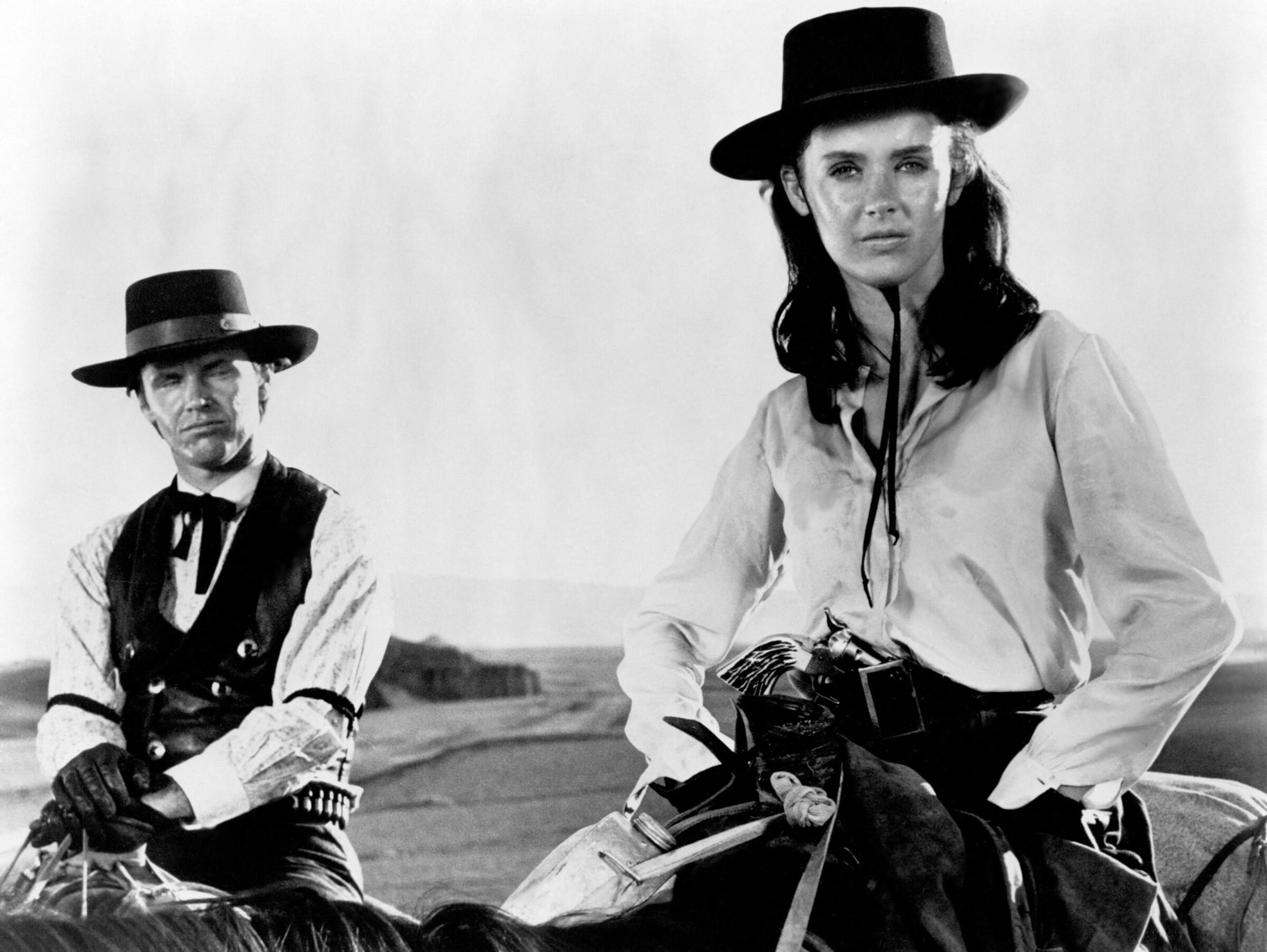
Jack Nicholson and Millie Perkins in THE SHOOTING
GK: But anyway, Tarantino and I talked, I told him about Charles Manson working on the Spahn Ranch, and sure enough, there it was in his movie. And it was very accurately portrayed. The Spahn Ranch looked exactly like that except for George Spahn’s house. It wasn’t up on the little hill, it was just on flat ground with a couple of steps to a porch. I never saw George. I shot like five movies there, as a production manager on a couple, I would have to go and say “hey George” to start. And the minute you walked in the door it just reeked terrible smells and old sandwich wrappers and rats. And he would just be sitting in there all the time. He was blind or at least, almost. And he would be sitting there drinking his coffee all the time, surrounded by all of this stuff. And I thought, how can he live like this? Later on we learned that Sandra Good was supposed to take care of him, which evidently she did. And he had a woman named Ruby who helped him with the horses, ran out the horses and stuff. In the movie, they had Tex Watson riding horses around. Tex never went near a horse. So that wasn’t real. He did walk around in a cowboy outfit all the time. He had six guns and everything, but he didn’t go near the horses. The horses were Shorty Shay who was killed by Manson, And a guy named Juan Flynn, an Argentine cowboy, nice guy. He was the only one of that group that I really kind of thought had something on the ball.
KJ: When you say “of the group,” was he one of the Manson people or one of the ranch people?
GK: Both.
KJ: ‘Cause Shorty worked at the ranch already, like before the Manson people came, right?
GK: Shorty never really bought into the Mansion group. Although he partied with him a little bit. He wasn’t really a high party guy. He wanted desperately to be a stuntman. And it just didn’t work out for him. He was good with horses, but horses were on their way out. The motorcycle had replaced the Western. Motorcycle movies. So Shorty was kind of just working as a ranch hand and trying to get work on films, however he could do it, as an extra or whatever. He knew Charlie and he knew the girls, but he stayed clear of them because the girls would come down and try and get our lunches from us and take our lunch, including Charlie. Charlie and the girls would try and recruit you to come at night, “Come, we’re gonna get stoned tonight, we’ll have a good time.” None of us went. ‘Cause they all just looked… you could tell there was something wrong. Even then, like in the movie, they’re very weird.
KJ: That’s what I love about that scene in the movie actually, where he just turns around and it’s like this moment where it clicks that there’s something bad going on here.
GK: Yeah. Exactly. We all knew they were very strange, but we didn’t know they had done the murders.
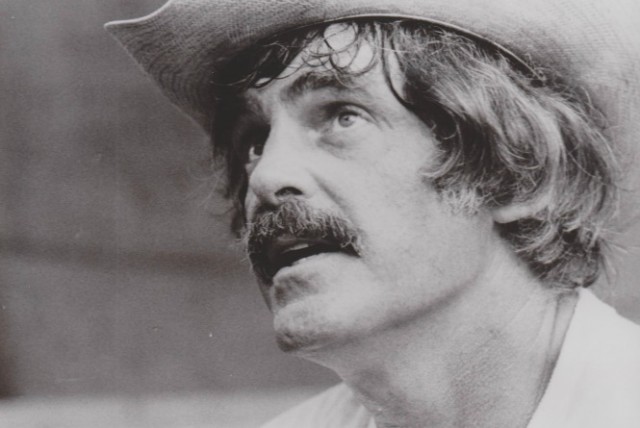 Gary Kent
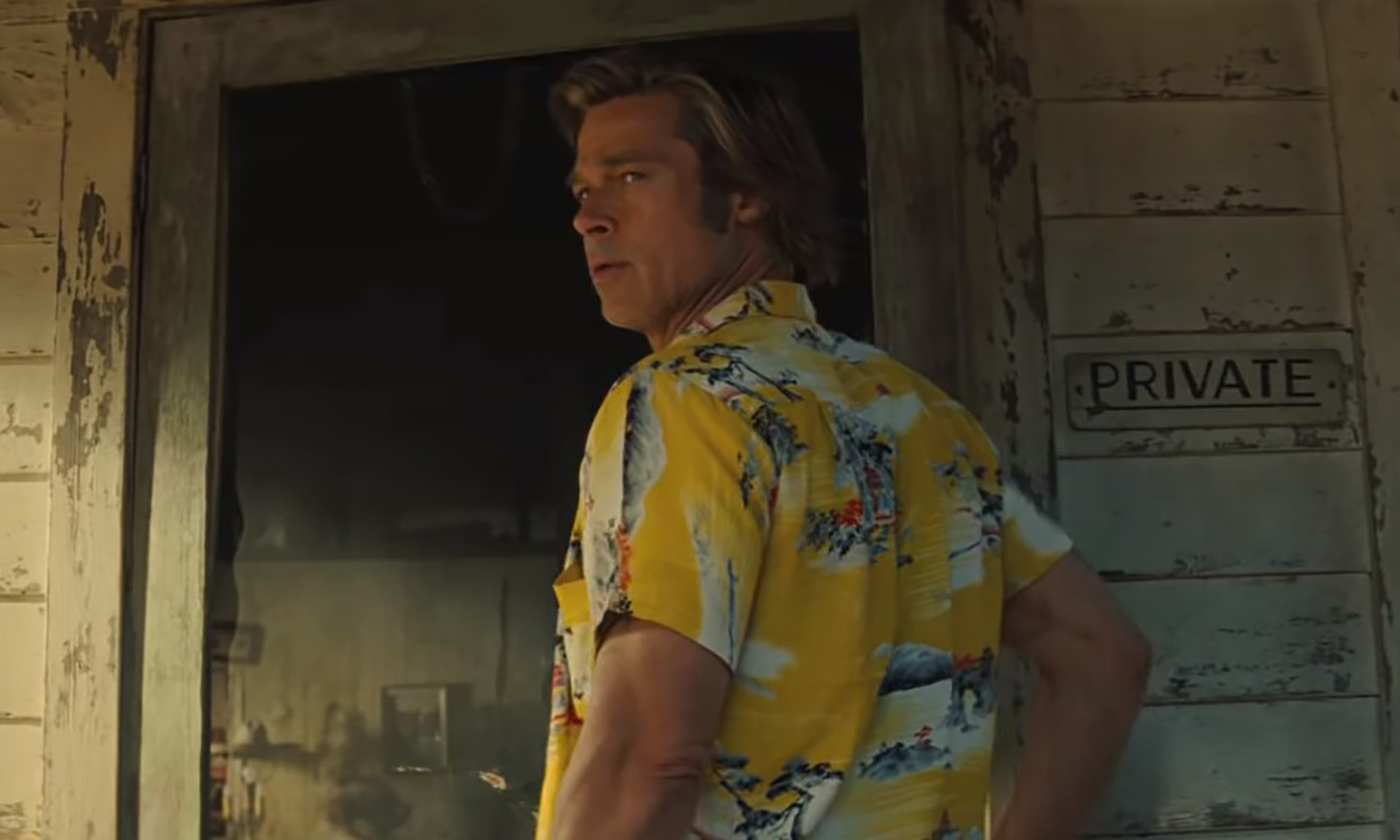 Brad Pitt as Cliff Booth in ONCE UPON A TIME IN HOLLYWOOD, a character based in part on Gary Kent
KJ: But people always describe like, the sort of double header of the Manson murders and Altamont, those two events, as being kind of the end of the sixties, you know, would you say that’s accurate?
GK: Yeah. The peace and love kind of went, it was kind of turning sour anyway because it had become so commercialized and everything being sold. “Hey, new age, get your T-shirt.” So the whole movement didn’t know where it was going. And then all of a sudden these really bad things happen and it kind of put the kibosh on the whole deal.
KJ: I’m imagining that played a big part in The Pyramid.
GK: Yeah, exactly. What can I say? And then the seventies began and my friend Paul Lewis, who was a great production manager, producer, great guy, knew the business. Paul Lewis always said the end of the seventies began at the beginning of the seventies. Now when were you born?
KJ: ’72.
GK: ’72. Well, that’s a big event. Your birth, hey!
KJ: The other thing too is like in the seventies when the movie Network came out, everybody made a big thing, like connecting it to the Christine Chubbuck case.
GK: Um-hmmm.
KJ: But your movie is before Network. And it seems obviously impacted by that event.
Both The Pyramid and Network were referencing — consciously or not — a tragic real-life event only a few years prior: the on-air suicide of local Sarasota anchor Christine Chubbock in 1974. “In keeping with the WXLT practice of presenting the most immediate and complete reports of local blood and guts news,” Chubbock stated in her last broadcast, “TV 40 presents what is believed to be a television first. In living color, an exclusive coverage of an attempted suicide.” She then shot herself in the back of the head, her “attempted” suicide ultimately fatal.
—From my chapter "We're in This Chaos Together: AMERICA and the Rise of Info-Tainment" in TRUTH & SOUL: A ROBERT DOWNEY SR. READERGK: Right, right, right. You know, I got the movie made and it was kind of different for the time. People went, “what is this?” But we got a distributor. I was in New York screening it for New York people. It’s funny how many different groups thought the movie was about them. When I got word that our producer had signed a deal with a distributor – whose name I won’t mention – but he was terrible. He was cooking the books. We opened up in Texas. We played 13 weeks in Houston, largely because of Edgar Mitchell, the astronaut – Edgar really got behind the movie and helped promote it. So it was doing really well. And then we found out the distributor was taking all the money and not reporting it. So I sued him, I stopped distribution. It took a year to get the movie back. And at the end of that year, I was broke. I won the case. I got the movie. Couldn’t do anything with it. So I went back to doing stunts and I just set it on the shelf where it remained for 40 some years. And then a friend of mine, Joe O’Connell saw it on the shelf, and he said, what is that? I said, it’s a movie I did in 45 year ago, and he said, “I want to see it.” So we screened it and Lars Nilsen from the Alamo saw it and they showed it on my birthday several years ago. They showed The Pyramid with one of Ray Steckler’s films. The Pyramid and Thrill Killers. Do you believe it?
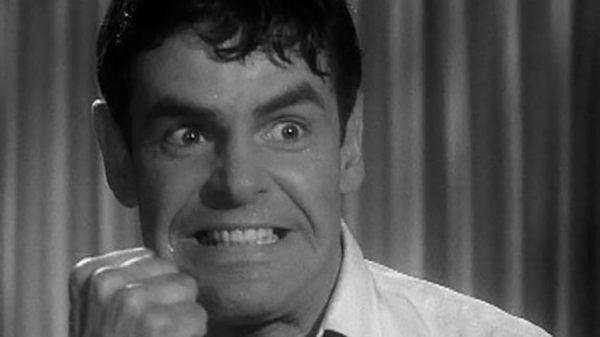 Gary Kent in THE THRILL KILLERS
KJ: Yeah, that movie is pretty grim. The Thrill Killers. I like his movies though in general. I walk a lot in LA and I always walk on Lemon Grove Avenue past the location of the old Lemon Grove Kids House, which unfortunately now is torn down, it’s an apartment building there. But how did you end up going from being a news person to being a stunt man?
GK: I went to Houston from Corpus Christi. I got out of the Navy. I was in Naval Air in Corpus, went to work doing news in Corpus. So when I decided to move to Houston, I had a job at a radio station on the weekends. But I drove an actress friend of mine to an audition at the Playhouse Theater in Houston, which was really well known. And they didn’t hire her, but they hired me! I just drove her there! And the director said, are you here to read? And I thought, well, why not? I said, yeah, I’m here to read. So I read and I got hired on at the Playhouse Theater, $55 a week, which back then wasn’t terrible money. But I got hired and I fell in love with theater again. I liked it in high school. I got my nose broken in football, and I couldn’t play. So I turned out for the drama club for something to do, and I really fell in love with acting and theater. So this theater group, long story short, in Houston, when the playoffs broke up for about two years, everybody went to New York but me. I had just seen On the Waterfront with Marlon Brando. I thought, man, that’s what it’s all about. I want to do that kind of work. So I took a Greyhound bus to Hollywood to become an actor. All the actors were outta work. It was just terrible. There were no jobs. Their pictures were just thrown in the trash cans. Not for me. I’ve gotta work. And I noticed a Frank Sinatra movie shooting on Gower Street, and all of a sudden I heard, “Okay, stuntman, get by your car.” I didn’t even know what a stuntman was, but I’d been in love as a kid with action movies, especially Burt Lancaster. I wanted to do that. I wanted to do sword fights and swing from the yard arm and do all that. So anyway, I saw these stunt men, and I thought, how can I get to be a stunt man? And I was having coffee with a friend of mine, a sound man, and he said he was going to Kanab, Utah to do two westerns for this young guy. And he said, they’re looking for a stuntman. I said, “I’m a stuntman!” <Laugh> not knowing anything about what a stunt man does. So I went on the interview with Jack Nicholson, who was also sort of a greenhorn getting started. But he interviewed me and he said, “Can you get a horse to get sick, slow down, fall down and die?” “No problem!” How am I gonna do that? But they hired me and I went to Utah, and then I called a vet and they came out and tranquilized the horse. So it gradually got sleepy and laid down, went to sleep, but the shot worked. So they were, like “God, Gary’s great. He knows how to do all this…” I was doing horse falls and I didn’t dig up the ground. I didn’t know anything. I was just doing it.
KJ: What do you mean “dig up the ground”? What is that?
GK: If you’re gonna do a fall, you dig up the ground and lay in soft sand. So when you fall, you fall into sand. Looks like you’re hitting hard ground, but you’re not. I didn’t know that. I just went on hard ground. But up to Kanab came the Daniel Boone TV company. And they had four of the best stuntmen in the business. And they wanted one other stunt man, but they didn’t want to send back to Hollywood for one. So they’re talking to Jack, and Jack said, ‘I’ve got a great stuntman’. And they went, okay, send him over. I remember I did a fall and I had a real gun on my hip. And I landed kind of on that hip. I had a huge bruise, I didn’t know you wear rubber guns. I didn’t know any of the tricks of the trade. But the Daniel Boone guys taught me. So By the time I got back to LA I pretty much knew how to do basic stunts, how to fake my way. So that started. And then there’s a guy, you probably know Chuck Bale.
KJ: Mm-hmm <affirmative>.
GK: Chuck had a little ranch outside of LA out in Simi Valley. He had 10 acres and a couple of falling horses, a high fall tower. So we’d meet there on the weekends, we’d practice fights and driving. We’d go to this abandoned school where we could use their parking lot to practice whatever we were gonna do with cars. There weren’t any stunt schools in those days. But the minute I started doing those westerns with Nicholson, it really started my stunt career, and I just fell in love with doing it.
KJ: So is it different now where like if you were just like, “Oh yeah, I’m a stunt man” and get hired on a movie, I imagine now that’s a huge liability insurance issue.
GK: Yeah. Now everybody’s a stunt man. <Laugh> Now it’s changed a lot. I haven’t done them since Bubba Ho-tep. Did you see Bubba Ho-tep?
KJ: Yeah. That’s a great movie.
GK: That put an end to my stunt career.
KJ: Oh, how come?
GK: We were shooting out at Malibu and they called lunch. I’d like to say it was doing a big stunt, but it wasn’t, I started down a hill and I caught my foot in a tree root and I fell and it put my leg up behind me. Broke it about three places. So I said, you know what, I’m getting a little old to be running around up and down cliffs and stuff. So I hobbled around for four months. That was it. I hung it up. But I had a great career, and I loved it. I loved the people, the men and women that did stunts.
KJ: So I don’t know if you have any more stories about The Pyramid, but what’s gonna happen to it now? Where are there materials for it to be released again?
GK: Yeah. The Alamo signed a distribution deal with me to make a Blu-ray. They did all kinds of stuff with it. And it’s gonna show on Turner Classic Underground in November. I did not have negatives. They did it from I think an interpositive, somehow they got a hold of the material and I heard that it looks pretty good. I haven’t seen it since they messed around with it, but I’m sure they made it look better. So the Alamo’s got it now. And I like the Alamo people. Well, I know you do, you’re one of ’em!
KJ: Yeah. Well, I used to be, but I’ve been connected to the Alamo people forever. Even when I don’t work there, I kind of work there.
GK: What made you leave the Alamo?
KJ: Well, I was just Canadian and I had to go back to Canada. I wasn’t legally allowed to be living here at the time. I had overstayed on my visa and stuff, and it was just a matter of time before I got in trouble for it. So yeah, I had to go back. But right now I’m on a visa for three years and so we’ll see what happens.
GK: What do you want to do?
KJ: What would I wanna do? I wanna produce stuff, I think. Producing a documentary or producing animation where you’re kind of just kind of facilitating an artist to just do their work. I’m making a documentary right now, about folk horror.
GK: Oh, really? Is the documentary field, is there a wide venue for showing it?
KJ: I think there is, ’cause a lot of what I wanna make documentaries about is usually film-related stuff, you know? And I feel like as long as you keep the overhead low enough, then it’s okay. A lot of the people I’ve gotten to give me cheap rates on things and stuff, it’s all been because they’re interested in the subject matter, you know, so they wanna support it.
GK: Joe [O’Connell] who did the documentary about me had been a writer for The Austin-American Statesman, but also a professor Austin Community College. And I know a ton people in this town who say “I’m gonna make a documentary” or “I’m gonna make a movie” who never leave the bar stool. You know, they’re still there and Joe just went out and did it.
KJ: Yeah. I mean, I think if you can just manage to get enough money to film like your first five interviews, it does so much in terms of the goodwill to be able to leverage that into more, you know? As soon as people see like, oh, you’ve interviewed five people, so it’s real, It’s a real thing. So as long as you can raise the funds to interview just a few people to start with. It really steamrolls from there.
GK: Did you say you were going to do a GoFundme?
KJ: No, I’m not doing one because I’m doing this for actually for David Gregory who made the Al Adamson documentary.
GK: Oh Really?
KJ: He’s the producer. It’s his company.
GK: Wow. <laugh>. Wow. Is this a small world or what? Well, I’ll be darned.
THE PYRAMID Restoration by The American Genre Film Archive (AGFA) has its Los Angeles Premiere at the Philosophical Research Society on Thursday June 18th, presented collaboratively by 7th House, Analog Outlaw and Enlightened Artists. The film will be introduced by Quatoyiah Murry, who wrote about THE PYRAMID in the book TCM UNDERGROUND: 50 MUST-SEE FILMS FROM THE WORLD OF CLASSIC CULT AND LATE-NIGHT CINEMA, which she co-authored with Millie De Chirico. Tickets are available at the Philosophical Research Society website HERE >>